

iOS vs. Android App Development: Which Platform Should You Build Your App On First?
October 5, 2026
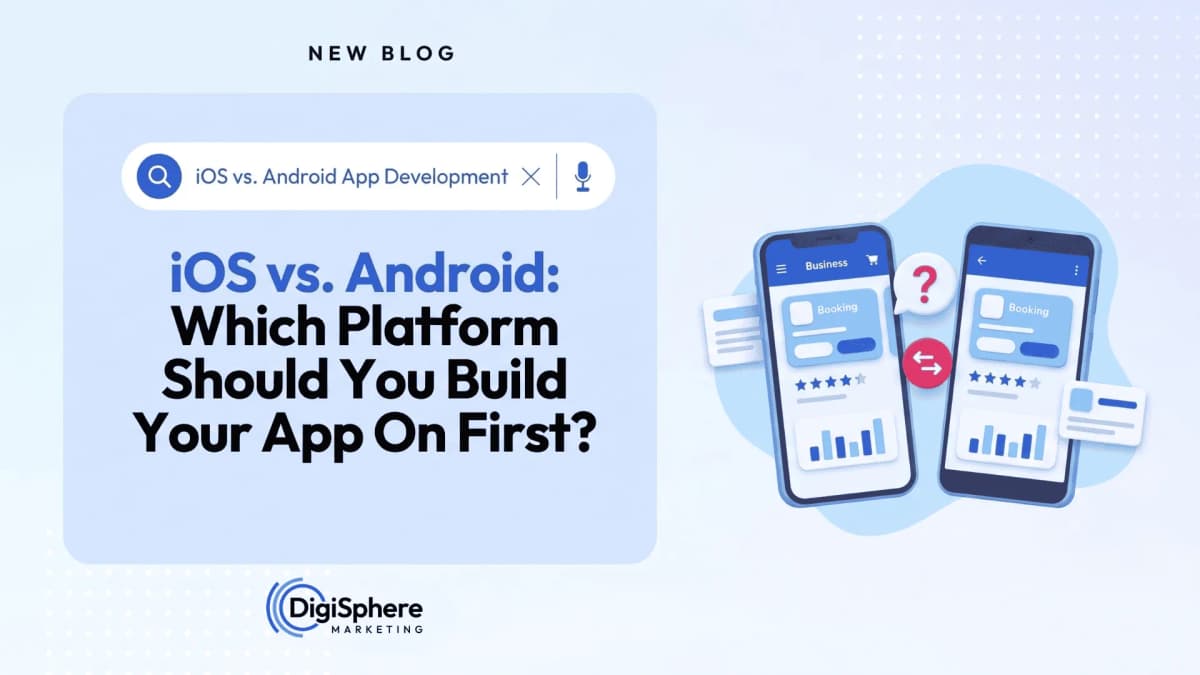
iOS vs Android app development comes down to three factors: where your audience is, what your budget allows, and how quickly you need to launch.
Most business owners ask which platform is better. The more useful question is which platform puts your app in front of your actual customers fastest, at a cost you can sustain.
This guide walks through a decision framework for choosing your first platform, explains where cross-platform frameworks like Flutter and React Native fit, and shows how each choice affects cost and time to launch for a first version.
How to Choose Between iOS and Android for Your First App
Platform choice is a business decision before it is a technical one. Work through these four questions in order, and the right answer usually becomes clear.
1. Where Are Your Customers?
Android holds roughly 70% of the global smartphone market, while iOS has the stronger position in the United States and tends to attract higher-spending users. Those two facts point in opposite directions, which is why market share alone should never settle the question.
Your own data settles it. Check the device and operating system breakdown in your website analytics, review your email list and customer records, and ask your best customers what they carry. If most of your visitors arrive on iPhones, build for iOS first. If your audience is split or skews toward Android, the calculation changes.
2. How Will the App Make Money?
iOS users generate more revenue per user on average, which makes iOS the stronger first choice for paid apps, subscriptions, and in-app purchases. Android's larger global reach favors ad-supported models and apps where total user volume matters more than revenue per user.
If your app supports your business rather than earning revenue directly, such as a booking tool, loyalty program, or customer portal, monetization matters less. Reach and convenience for your existing customers matter more.
3. What Does Your Budget Allow?
Building one native app is the lowest-cost way to launch. Building two separate native apps adds substantially to design, development, and testing work, because each platform has its own codebase, interface standards, and store requirements. Android also adds testing time of its own, since your app has to perform consistently across a wide range of screen sizes and device models.
Launching on one platform with a focused first version also protects your budget. You learn how real users behave before you invest in a second build.
4. How Fast Do You Need to Launch?
A single-platform first version is the fastest path to market. Each app store also has its own review process and technical requirements, so build review time into your launch plan rather than treating it as an afterthought. If your launch date is tied to a season, a campaign, or a contract, say so during scoping so the plan is built backward from that date.
DigiSphere Note: Choosing a platform is one step in a larger build. For the full picture of how app development works, from discovery through launch, read our app development guide for business owners.
Where Cross-Platform Frameworks Like Flutter and React Native Fit
Cross-platform frameworks let a development team build one codebase that runs on both iOS and Android. For many small and mid-size businesses, that makes them the practical third option: you reach both audiences at launch without paying for two separate native builds.
Cross-platform works well for apps built around standard business functions such as booking, ordering, loyalty rewards, account management, and customer messaging. It is a weaker fit when your app depends on advanced device hardware, demanding graphics, or the newest platform-specific features, where a native build gives you more control.
The tradeoff is straightforward. Cross-platform typically lowers cost and shortens time to launch for a two-platform release, while native builds give you maximum performance and platform polish. The right choice depends on what your app actually needs to do, which is why a proper scoping process matters before any platform decision is final.
Quick Decision Guide
| If This Describes Your Situation | Start With |
|---|---|
| Your customers are mostly in the US and the app earns revenue through subscriptions or purchases | iOS first |
| You need maximum reach, serve a global audience, or earn revenue through ads | Android first |
| You need both platforms at launch on a limited budget and the app uses standard features | Cross-platform (Flutter or React Native) |
| Your app depends on advanced hardware, demanding graphics, or the newest platform features | Native build on the platform your audience uses most |
| You want to validate demand before a larger investment | One platform with a focused first version, then expand using real user data |
Treat Your First Platform as a Starting Point
Choosing one platform first does not lock you in. Plan for the second platform from day one by building the backend and data layer so both apps can share it. When the server side is platform-neutral, adding the second app later costs far less than starting over.
Before you commit to a build partner, make sure they can explain these tradeoffs plainly. Our guide to the questions to ask before hiring an app developer covers what to look for.
Frequently Asked Questions
Should I build my app for iOS or Android first?
Build first for the platform most of your customers use. Check your website analytics and customer data to find out. If your audience is mostly in the US or your app earns revenue through purchases or subscriptions, iOS is usually the stronger starting point. If you need maximum reach or serve a global audience, Android often makes more sense.
Is it cheaper to build an iOS or Android app?
Neither platform is cheaper by default. Features, design complexity, and integrations drive cost far more than the platform itself. The bigger cost decisions are whether you build one platform or two, and whether you build native or cross-platform. A proper discovery and scoping process is the only way to get an accurate number for your project.
Is cross-platform development good enough for a business app?
For most standard business apps, yes. Frameworks like Flutter and React Native handle booking, ordering, loyalty, and customer account features well. Apps that depend on advanced hardware access or highly demanding performance may still be better served by a native build.
How do I know which platform is right for my specific app?
The right platform depends on your audience, revenue model, budget, and timeline. DigiSphere starts every project with a discovery process that evaluates all four, then recommends the platform approach that fits. See our custom app development services for how that process works.
Not sure which platform fits your app? DigiSphere will review your audience, goals, budget, and timeline, then recommend the platform approach that gets you to launch with the least wasted spend.