

Review Management Services: What They Include and How They Differ From Reputation Management
November 25, 2026
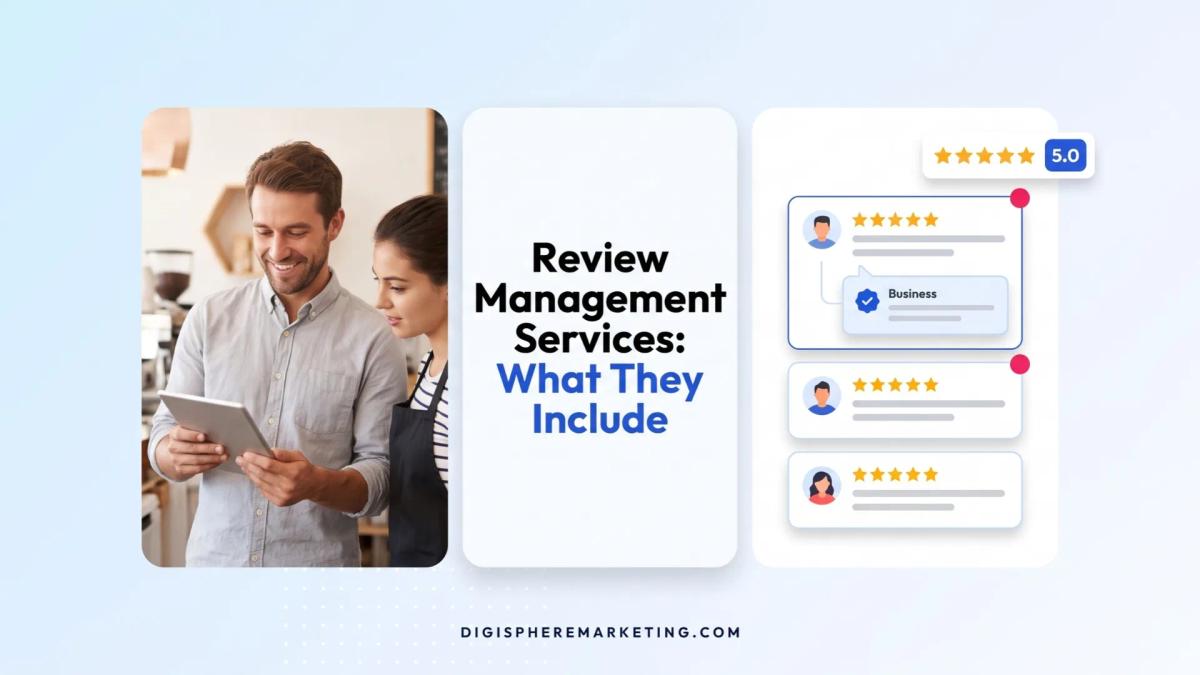
Review management services are ongoing programs that collect, respond to, and monitor customer reviews for a business across Google and other review platforms.
They are often confused with reputation management, which covers a much wider range of work. Knowing where the two differ helps you buy the right service and avoid paying for work you do not need.
This guide explains what a managed review program includes each month, how it compares with reputation management, which practices to avoid, how reviews affect local ranking and AI search, what drives the cost, and how to evaluate a provider.
What Review Management Services Include
An online review management service handles the routine work of earning, answering, and tracking reviews so it happens consistently instead of only when someone has time. Most businesses know reviews matter. Few have a process that keeps them coming in and keeps every one answered.
The Four Parts of a Managed Review Program
Review requests. A system that asks every customer for a review at the right moment, usually shortly after the service is delivered, with a direct link to your Google review form. The goal is steady volume from a representative group of customers, not a burst from the happiest few.
A response routine. A professional reply to every review, positive and critical. Responses to positive reviews thank the customer and reinforce what went well. Responses to negative reviews acknowledge the problem, stay calm, and move the conversation offline.
Monitoring across platforms. Reviews appear on Google, Facebook, industry directories, and other sites. Monitoring catches new reviews quickly, flags urgent ones, and watches for reviews that may violate platform policies.
Reporting. A regular summary of review volume, average rating, response rate, and common themes in customer feedback, so the program informs decisions about your service and not just your profile.
Review Management vs. Reputation Management: Where the Scopes Differ
Review management is one part of reputation management. The table shows how they compare.
| Factor | Review Management | Reputation Management |
|---|---|---|
| Focus | Customer reviews and ratings | Everything people find when they search for your business |
| Typical activities | Requesting, answering, and monitoring reviews | Review work plus search results, press coverage, social profiles, and brand content |
| Where it happens | Google Business Profile and review platforms | Search results, news, social media, and review sites |
| Best suited to | Local businesses that need steady, well-handled reviews | Businesses facing damaging search results or a wider brand problem |
Most local businesses need review management first. If your main challenge is the volume and quality of reviews on your profiles, a review program addresses it directly. If negative articles, outdated listings, or misleading search results are the problem, you need the broader scope of reputation management, which includes review work. For an overview of that wider category, see our guide to business reputation management.
DigiSphere Note: Review management works best as part of a complete local visibility program. DigiSphere connects review work to your profile, your website, and your reporting through our Google Business Profile management service.
What to Avoid: Review Gating, Incentives, and Purchased Reviews
Some review tactics break platform rules, and some now break federal rules. A legitimate program avoids all of them:
- Review gating: asking customers how they felt and sending only the happy ones to your review page. Google's policies prohibit selectively soliciting positive reviews.
- Incentives: offering discounts, gifts, or payment in exchange for reviews. Google prohibits offering incentives for reviews.
- Purchased or fake reviews: paying for reviews, writing them yourself, or having insiders post them without disclosure.
The Federal Trade Commission's final rule banning fake reviews and testimonials prohibits fake and purchased reviews, including compensation tied to a particular sentiment, and carries civil penalties. The practical lesson is simple: ask every customer, never script or pay for the answer, and ask any provider to confirm in writing that it follows these rules.
How Reviews Connect to Local Ranking and AI Search
Reviews do two jobs: they help people decide, and they help people find you. Google states that review count and review score factor into local search ranking, and that responding to reviews shows customers you value their feedback.
Reviews also matter when AI tools summarize and compare local businesses. These systems can draw on public review content to describe what customers say about you, which makes the themes in your reviews part of how you are presented before anyone visits your site. Our post on AI agent readiness for small businesses explains why trust signals like these carry more weight as AI-driven search grows.
Consistent review work can also earn recognition. BusinessRate, a company that ranks local businesses using Google review data, named DigiSphere a Best of 2026 Award Winner in the Marketing Agency category for Lakewood Ranch. Google does not run or endorse that award, and we explain what it does and does not measure in our BusinessRate Best of 2026 award post.
What Influences the Cost of a Review Management Program
Review management is priced by the work involved, so the same factors that change the workload change the cost. No single figure fits every business, and any provider quoting one without understanding your situation is guessing. The main factors are:
- The number of locations or profiles being managed
- The volume of reviews that need responses each month
- How many platforms need monitoring
- Whether review requests are automated or handled manually
- The level of reporting and analysis you want
- Industry sensitivity, since healthcare, legal, and similar fields need extra care in how they respond
The most reliable way to compare options is to ask each provider what is included, what is not, and how the program scales as your review volume grows.
How to Choose a Review Management Company
Review management companies differ widely in quality. When you compare them, ask:
- Do you follow Google's review policies and the FTC rule, and will you confirm it in writing?
- Who writes the responses, and do I approve the tone before they are published?
- Do I own the profiles, accounts, and data at all times?
- What will the reports show, and how often will I receive them?
- How do you handle negative and suspicious reviews?
Be cautious of any company that guarantees a star rating or promises to remove negative reviews. Neither can be guaranteed honestly.
Frequently Asked Questions
What is review management?
Review management is the ongoing process of asking customers for reviews, responding to every review, and monitoring review platforms for new feedback. It keeps your profiles active and your customers' experiences visible to the people comparing you with competitors.
What is the difference between review management and reputation management?
Review management focuses on customer reviews and ratings. Reputation management is broader and covers everything people find when they search for your business, including search results, news coverage, and social profiles, along with reviews. Many local businesses start with review management and add the broader scope only if they need it.
Can a review management company remove negative reviews?
Not legitimate ones. Google removes reviews that violate its policies, and a provider can help you flag and report those. Honest negative reviews stay, and the right response is a professional reply and a fix for the underlying issue. Be wary of anyone who promises removal.
Can I offer customers a discount or gift for leaving a review?
No. Google prohibits offering incentives for reviews, and the FTC's rule bans compensation tied to a particular sentiment. Ask every customer for an honest review, make it easy with a direct link, and let the quality of your service do the work.
How quickly should a business respond to reviews?
As soon as practical, ideally within a day or two, and always for critical reviews. Fast, professional responses show customers that you pay attention, and they give an unhappy customer a reason to give you another chance. DigiSphere includes response management in its review programs.
Want a clearer picture of how your reviews look to customers? DigiSphere will review your profiles, show you where reviews and responses are falling short, and outline a program that fits your business.
Get Your Free Review Audit